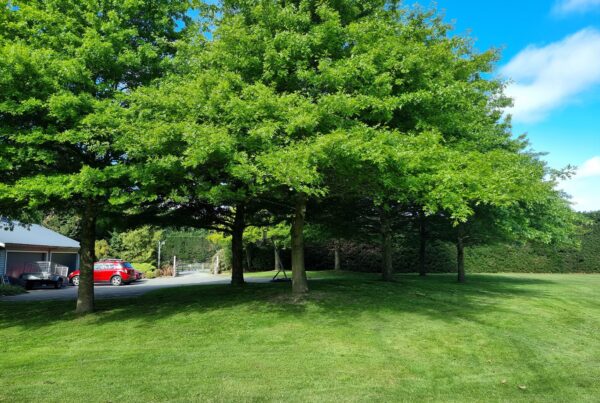

Fallen trees, snapped limbs and roots lifting paving are some of the problems we’re called out to deal with across Christchurch and Canterbury.
These nine jobs show what happened, what we found when we inspected the trees, and how we dealt with the damage. In some cases, removal was the most practical option. In another, pruning allowed the tree to be retained.
Where we discuss possible causes, these are our assessments based on what we observed on site. A tree can fail for more than one reason.
1. Tree roots lifting paving and affecting underground services
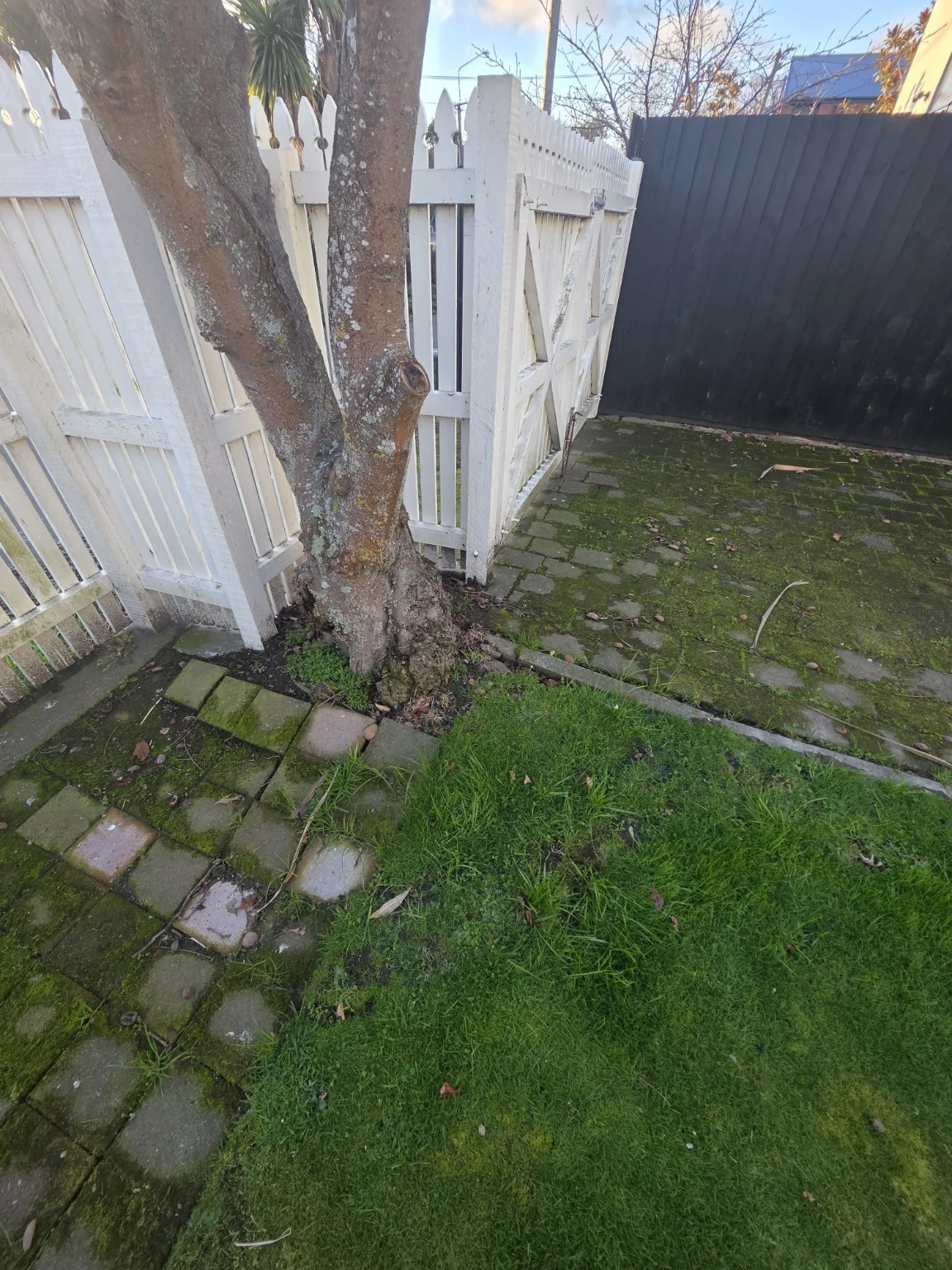
This tree’s roots were lifting tiles and disturbing underground services. The problem involved the space below ground as well as the tree itself.
We removed the tree and ground the stump as part of dealing with the issue.
For homeowners, this is a reminder to consider the space a tree will need as it grows, including its proximity to paving and underground services. If roots are already causing damage, get advice before deciding what to do with the tree.
2. A tree blown over in strong winds, with root decay present
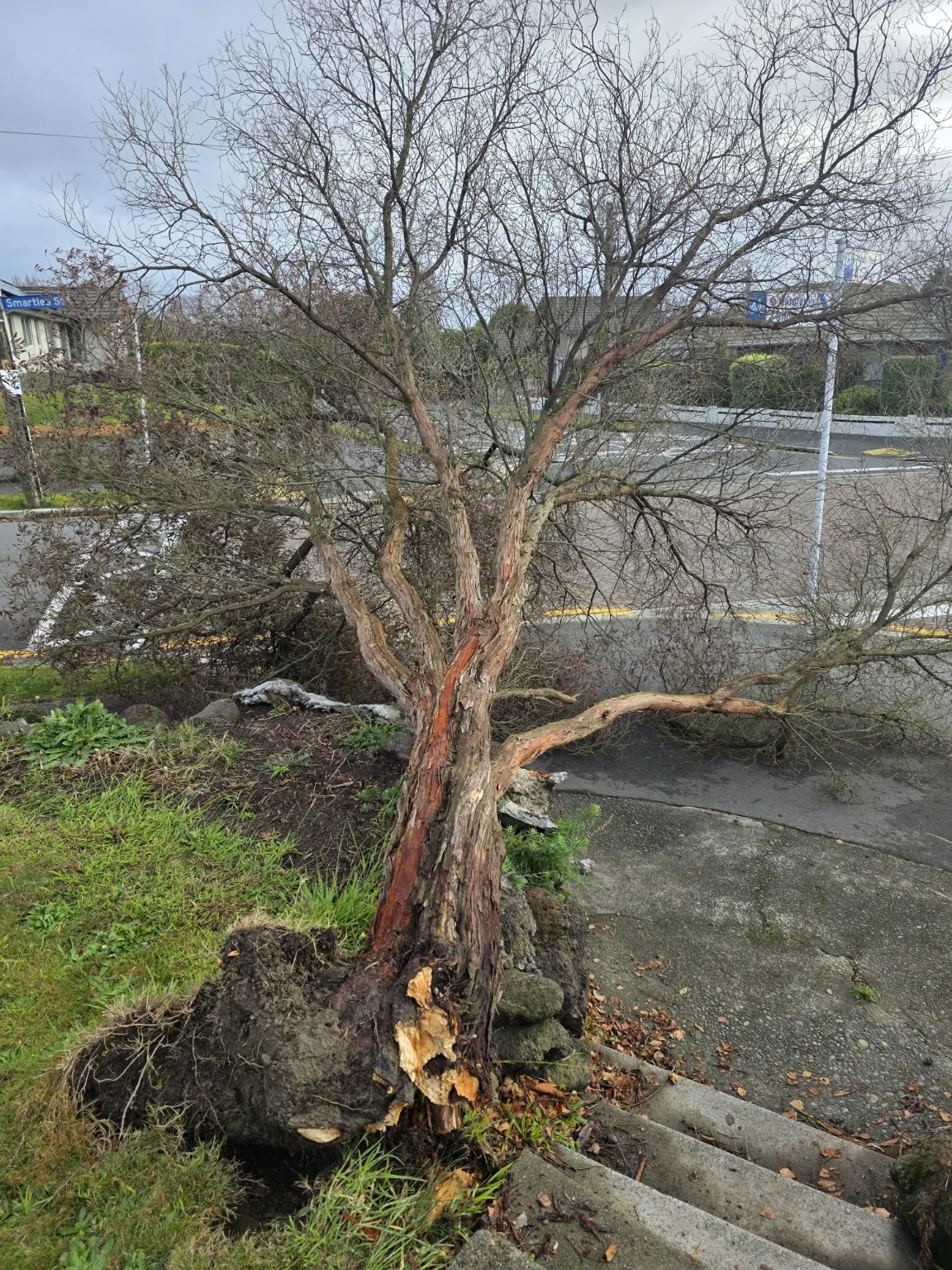
We were called to a tree that had blown over during strong winds. On inspection, we found root decay, along with canopy dieback and deadwood.
The wind was the immediate event, but the root decay may also have contributed to the failure. We cut up and chipped the fallen tree, then removed the debris.
The condition of the canopy was another part of the picture. If you notice sections of your tree dying back or an increase in dead branches, it is worth having the tree assessed to understand what is happening.
3. A row of poplars uprooted after flooding
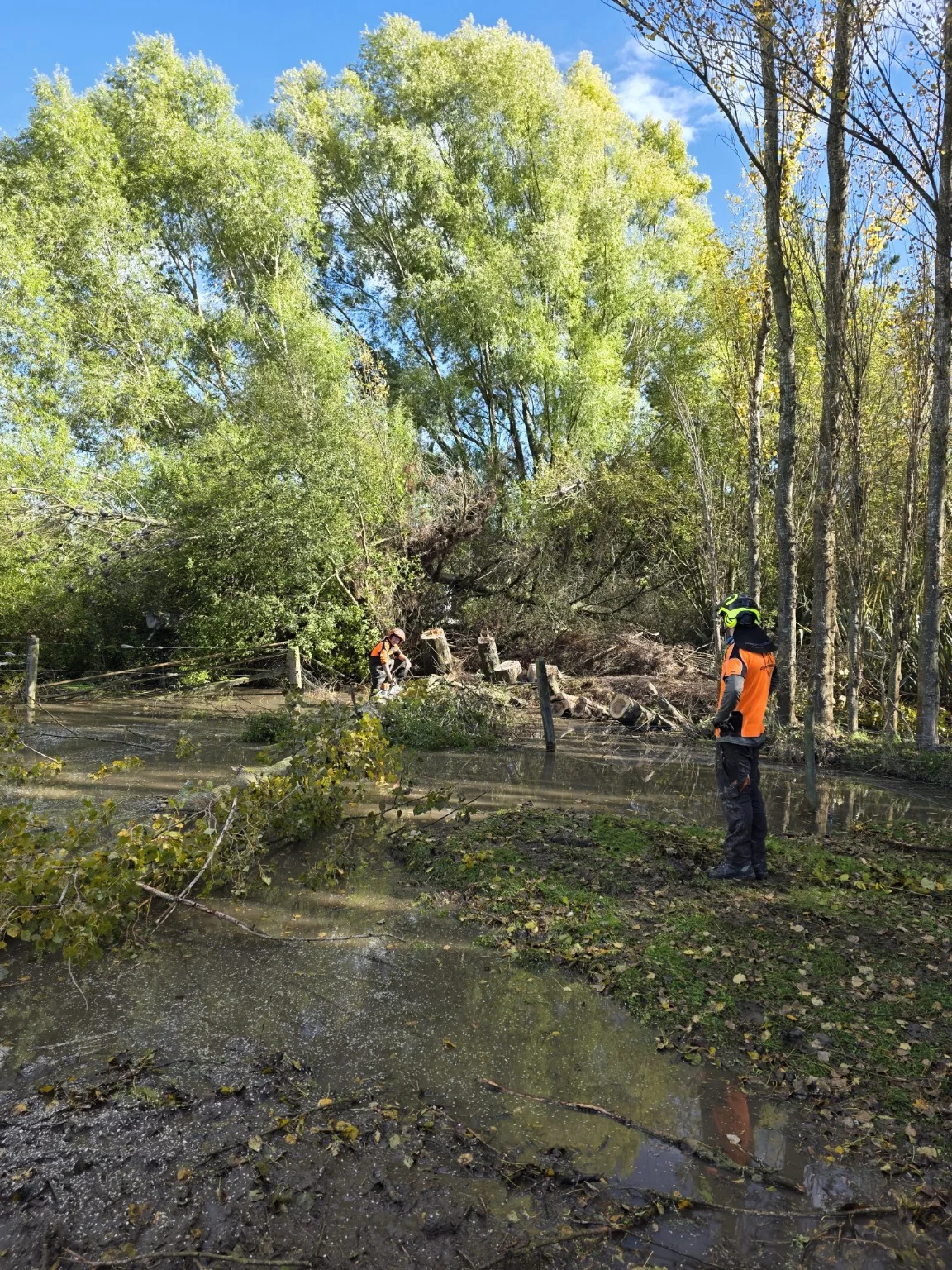
A row of poplar trees had fallen over with their roots pulling out of the ground. The area had experienced flooding, and we believe the saturated soil contributed to the trees losing their anchorage.
We cut up and chipped the fallen trees to clear the affected area.
Wet ground and wind can act together: saturated soil can offer less resistance to uprooting. That does not mean every tree in wet soil will fall, but ground conditions are an important part of assessing what may have happened.
4. A large willow limb damaging a neighbor’s fence and clothesline
A large limb broke from this willow during strong winds and fell onto a neighboring property, damaging a fence and clothesline.
When we inspected the remaining tree, we found several structural defects. Our assessment was that there was no cost-effective way to manage the risk it posed adequately while retaining it.
We removed the willow to ground level.
This job shows why assessing the remaining tree matters after a major branch failure. Clearing the fallen limb is only one part of deciding what work is needed.
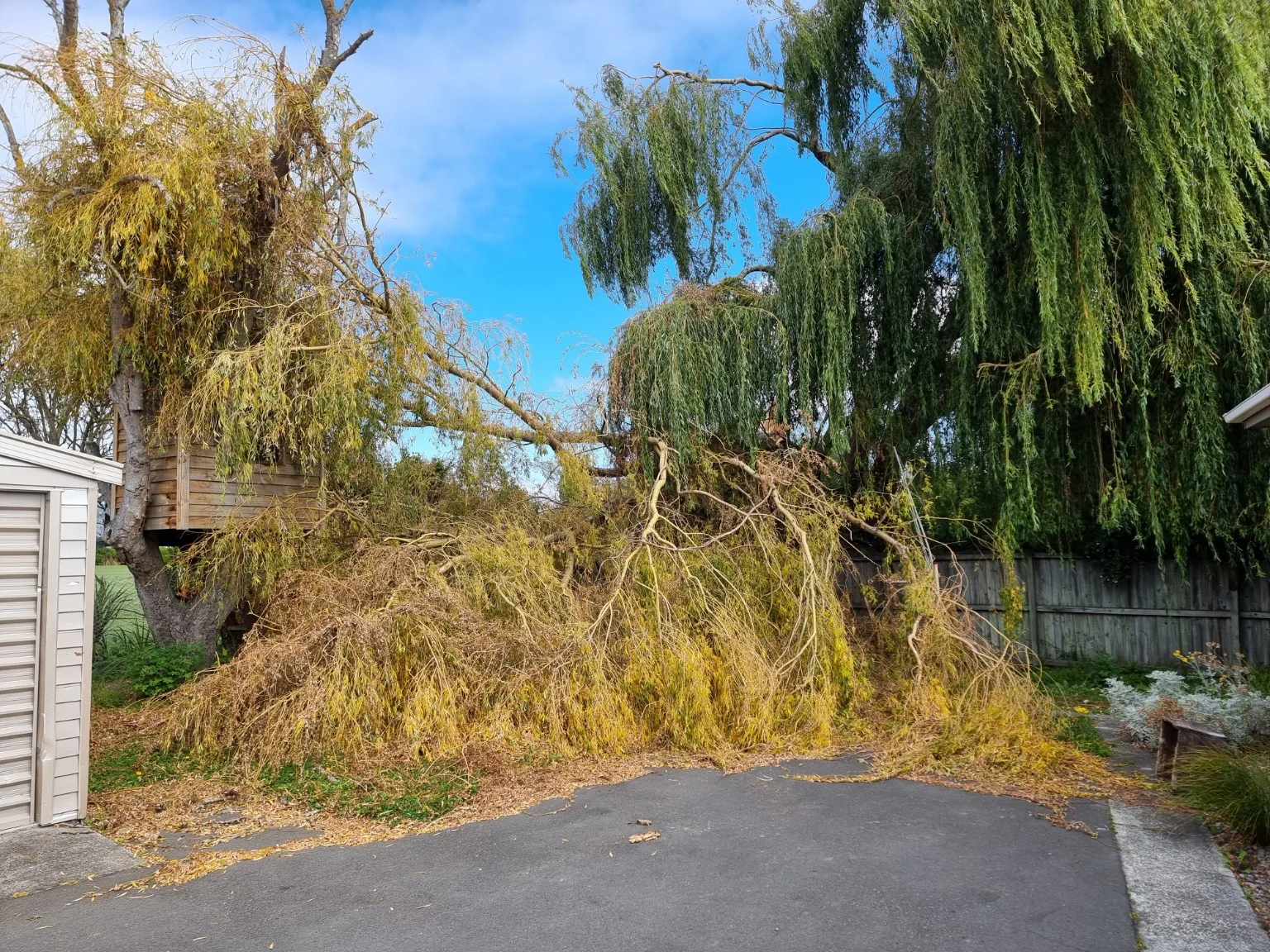
5. An overextended willow limb snapping in the wind
On another willow, a long, overextended limb snapped during windy conditions.
We cut up and chipped the broken limb. After assessing the remaining tree, we concluded that the risk it posed could not be managed effectively, and the tree was removed.
Although both willow jobs involved broken branches, each needed its own assessment. The decision to remove this tree was based on its condition and the risk it presented.
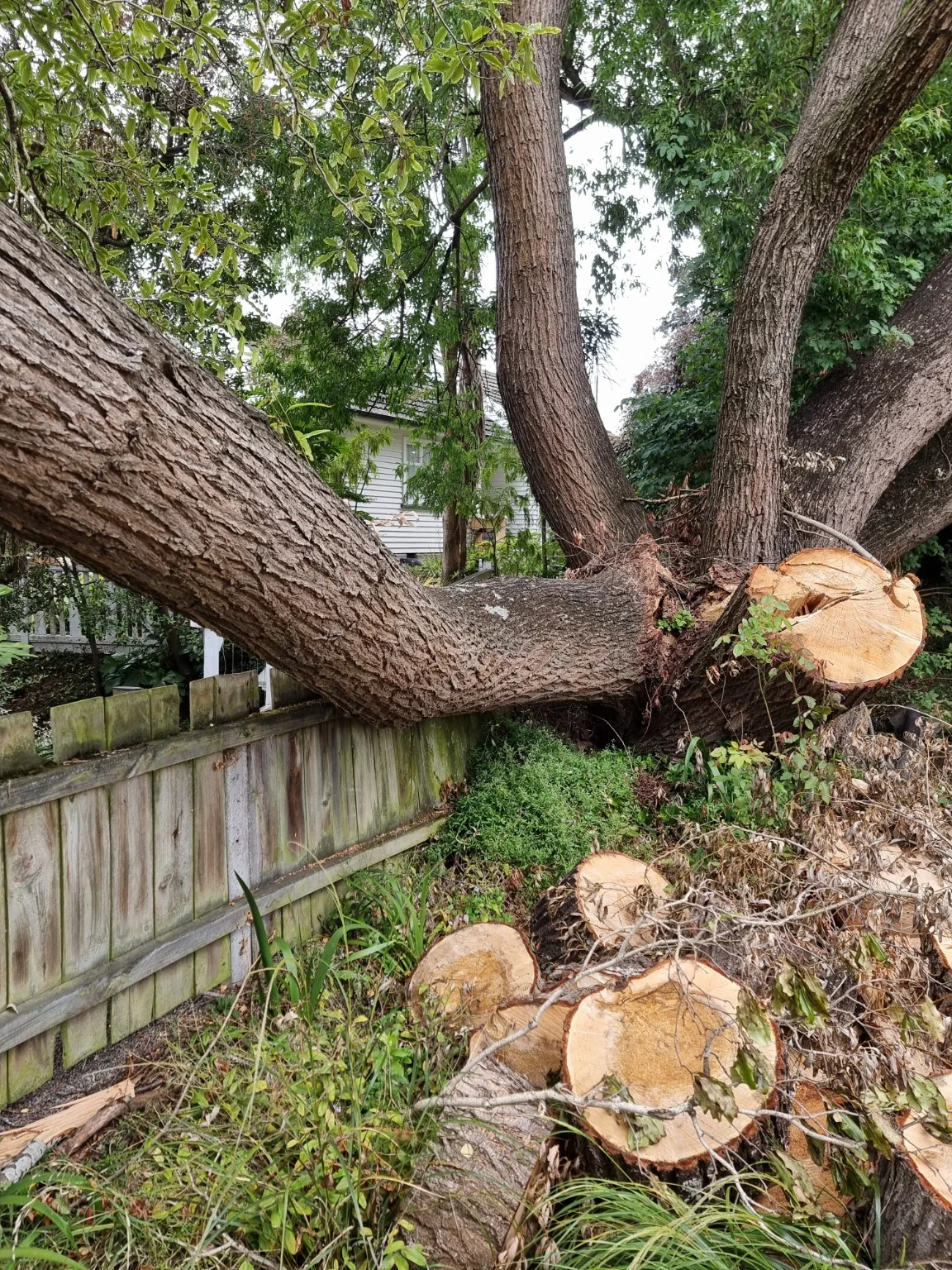
6. A pine fracturing at the base during high winds
This pine fractured at its base during high winds. Other trees had recently been removed nearby, and we believe the resulting increase in wind exposure may have contributed to its failure.
That was a possible contributing factor based on the site conditions, rather than a confirmed single cause.
We chipped the fallen tree and removed the material from the site.
The nearby removals were a relevant part of our assessment of what had changed around this tree.
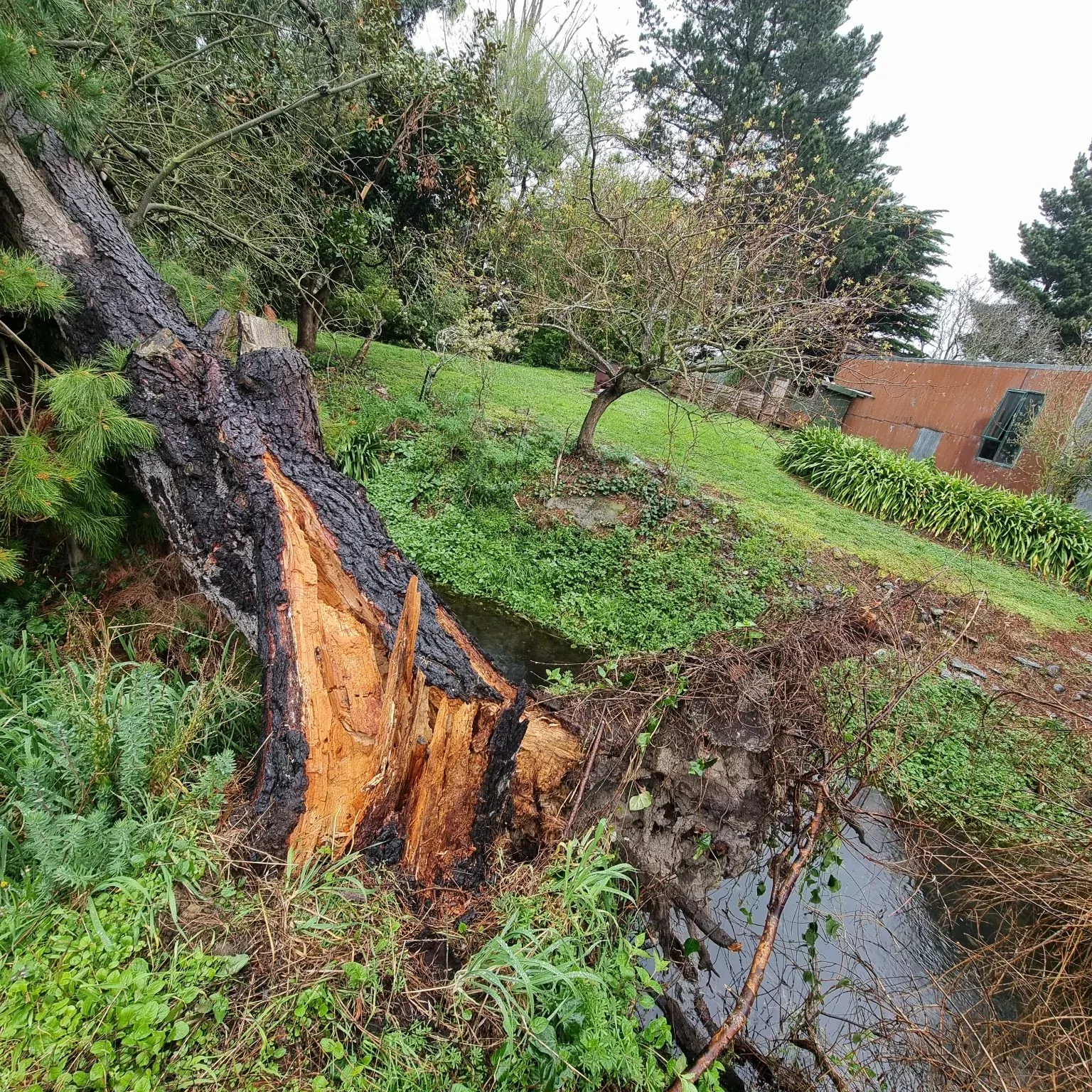
7. A large black poplar failing at the base
A large black poplar failed at its base. On inspection, we found decay in the lower trunk.
Other large trees had also been removed from the surrounding area. We believe the decay and increased wind exposure may both have contributed to the failure.
This example shows why we look at both the tree and its surroundings when considering what went wrong.
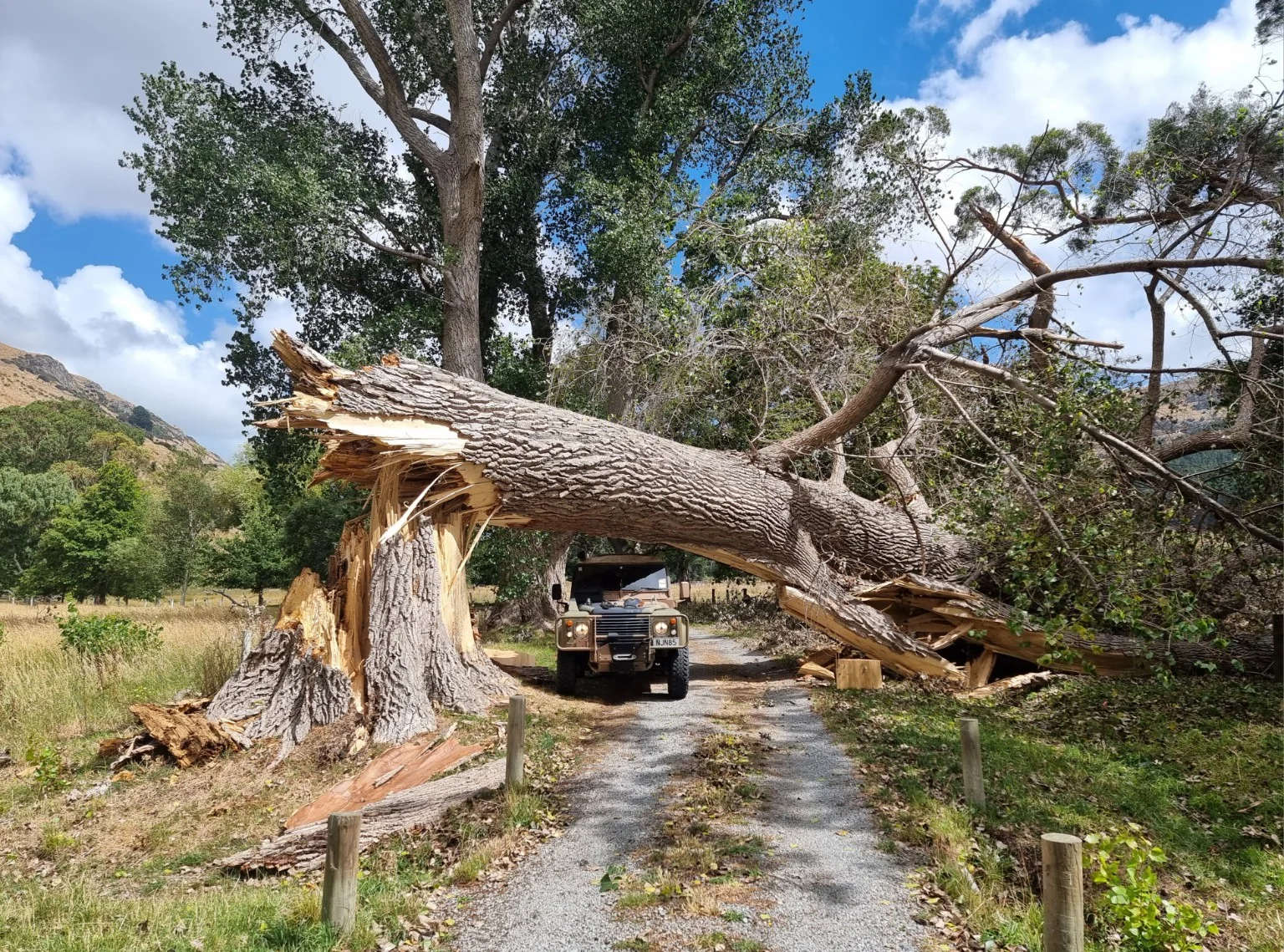
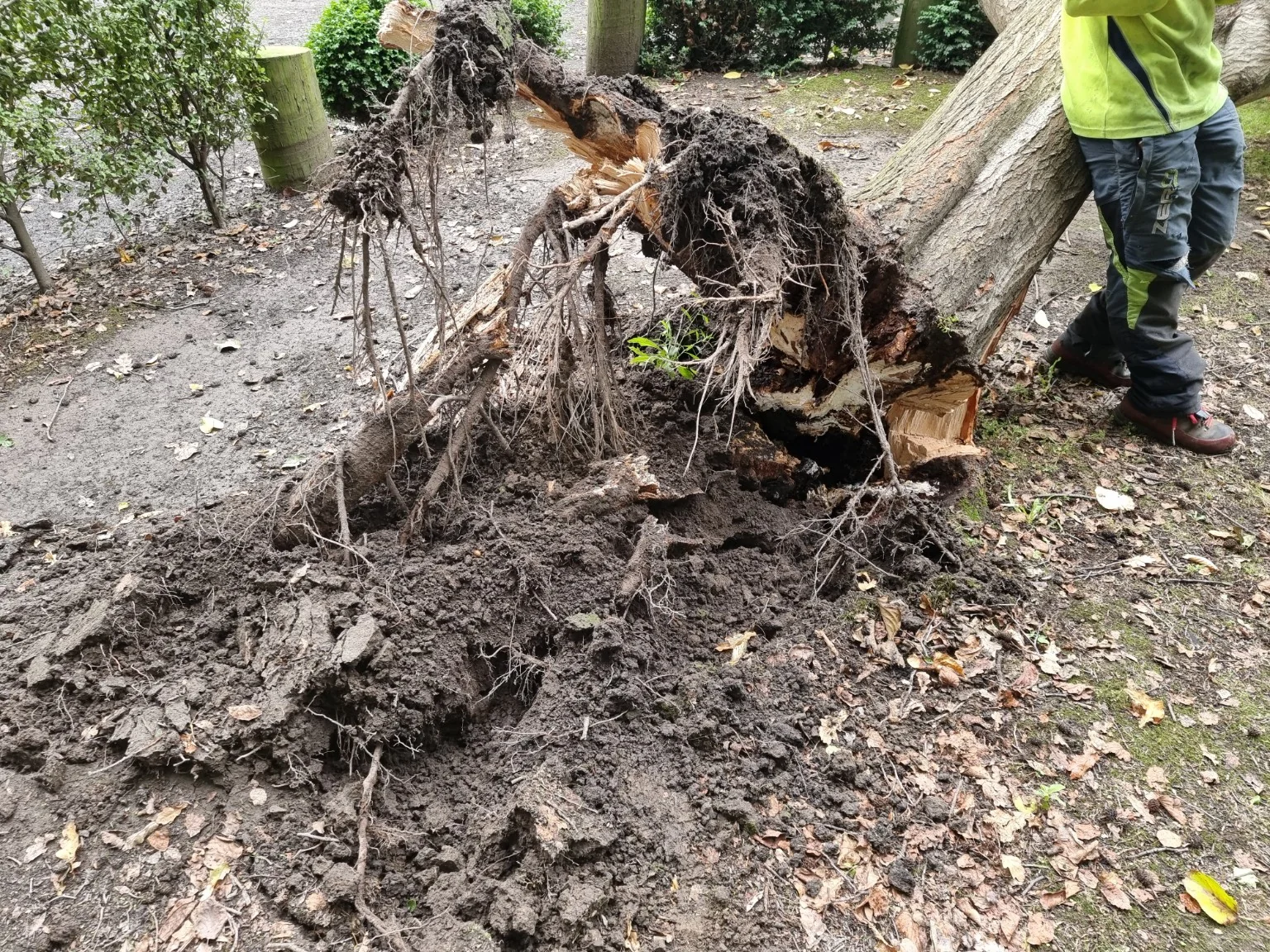
8. A Linden tree falling after root failure
This Linden tree fell after its roots failed. We cut up and chipped the tree, then removed the material from the site.
The failure occurred below ground rather than through a snapped trunk or broken branch. We have not assigned a specific underlying cause in this example.
It is a useful comparison with the other jobs: trees can fall in different ways, and the visible outcome does not always tell the whole story.
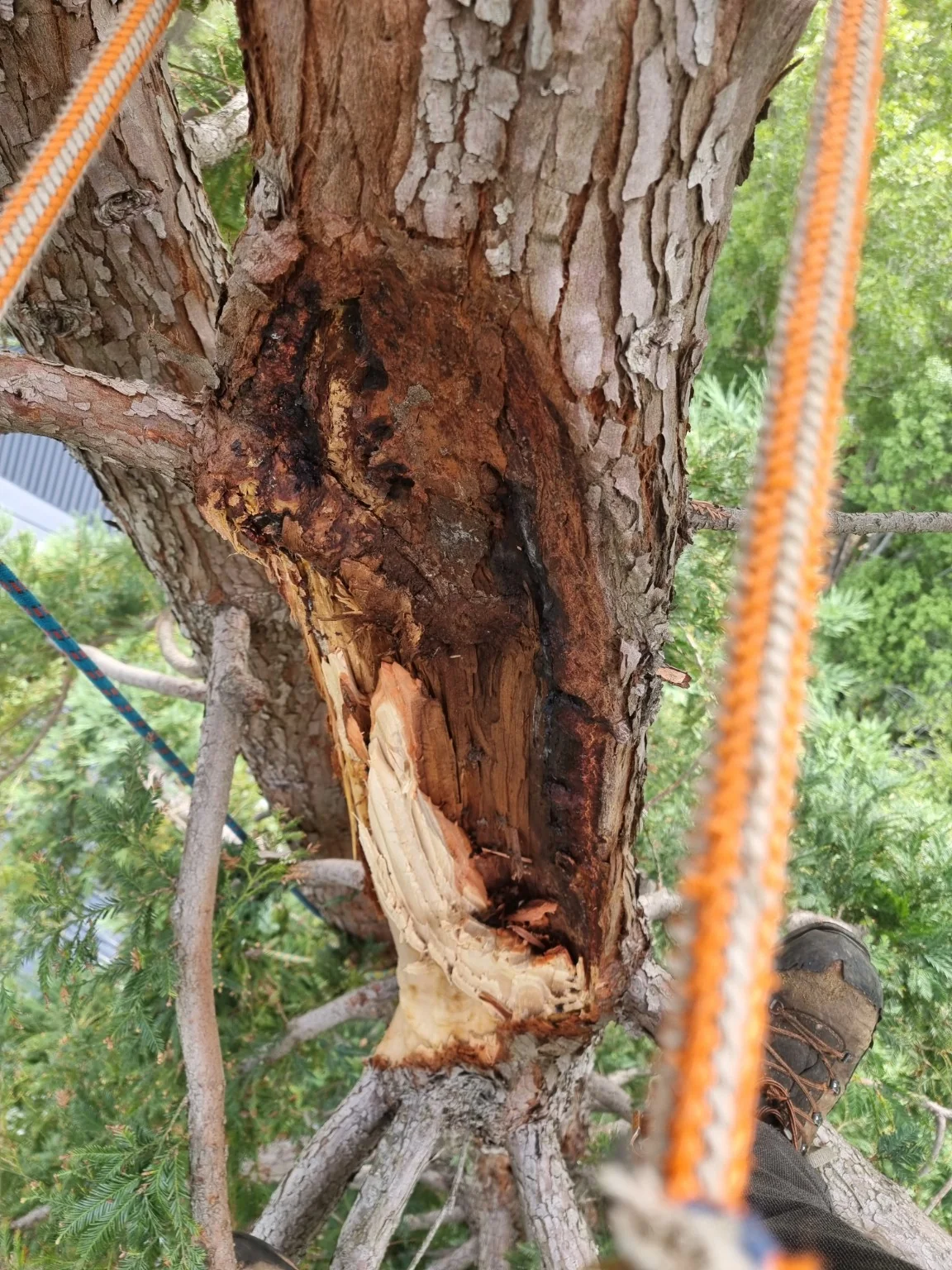
9. A conifer retained after a failure high in the canopy
This conifer suffered a failure high in its canopy at a branch union with included bark.
Included bark is bark trapped within the join between branches or stems. In this case, we identified the union as a structural defect associated with the failure.
After assessing the remaining tree, we reduced the canopy to take weight and leverage off the remaining structure. Our assessment was that this work allowed the tree to be retained with reduced risk.
Recognizing structural issues earlier can create more options for managing them. The appropriate work depends on the tree’s age, condition and branch structure; pruning cannot guarantee that a tree will never fail.
Does a damaged tree always need removing?
No. These jobs included trees that needed removing and a conifer that we were able to retain through pruning.
Our approach depends on the condition of the remaining tree, what it could affect and whether the risk can be managed effectively. We explain the practical options so the owner can make an informed decision.
You can read more about our tree pruning and trimming services and tree removal services.
Concerned about a tree on your property?
Canterbury Tree Experts provides tree pruning, tree removal and stump grinding across Christchurch, North Canterbury and the wider Canterbury region.
If you have a damaged tree, troublesome roots or concerns about a tree’s condition, call Ben on 027 423 1538 to discuss the job and arrange a site visit and free quote.